Introduction
Applying sealant manually can be tiring, especially when working on long joints, large renovation projects, or repetitive sealing tasks. A Cordless Caulking Gun provides a more convenient way to dispense caulk, adhesive, and sealant with consistent pressure and improved control.
Powered by a rechargeable battery, a Cordless Caulking Gun eliminates the need for continuous manual squeezing. This can help reduce hand fatigue while making it easier to maintain a smooth and consistent flow of material.
From bathroom sealing and window installation to construction, woodworking, and general home improvement, cordless caulking tools can be used in a wide variety of applications.
For DIY users, contractors, installers, and professional workers, choosing the right Cordless Caulking Gun can improve both working efficiency and application control.
In this guide, we will explain what a cordless caulking gun is, how it works, its key features and applications, and what to consider when choosing one for your projects.
What Is a Cordless Caulking Gun?
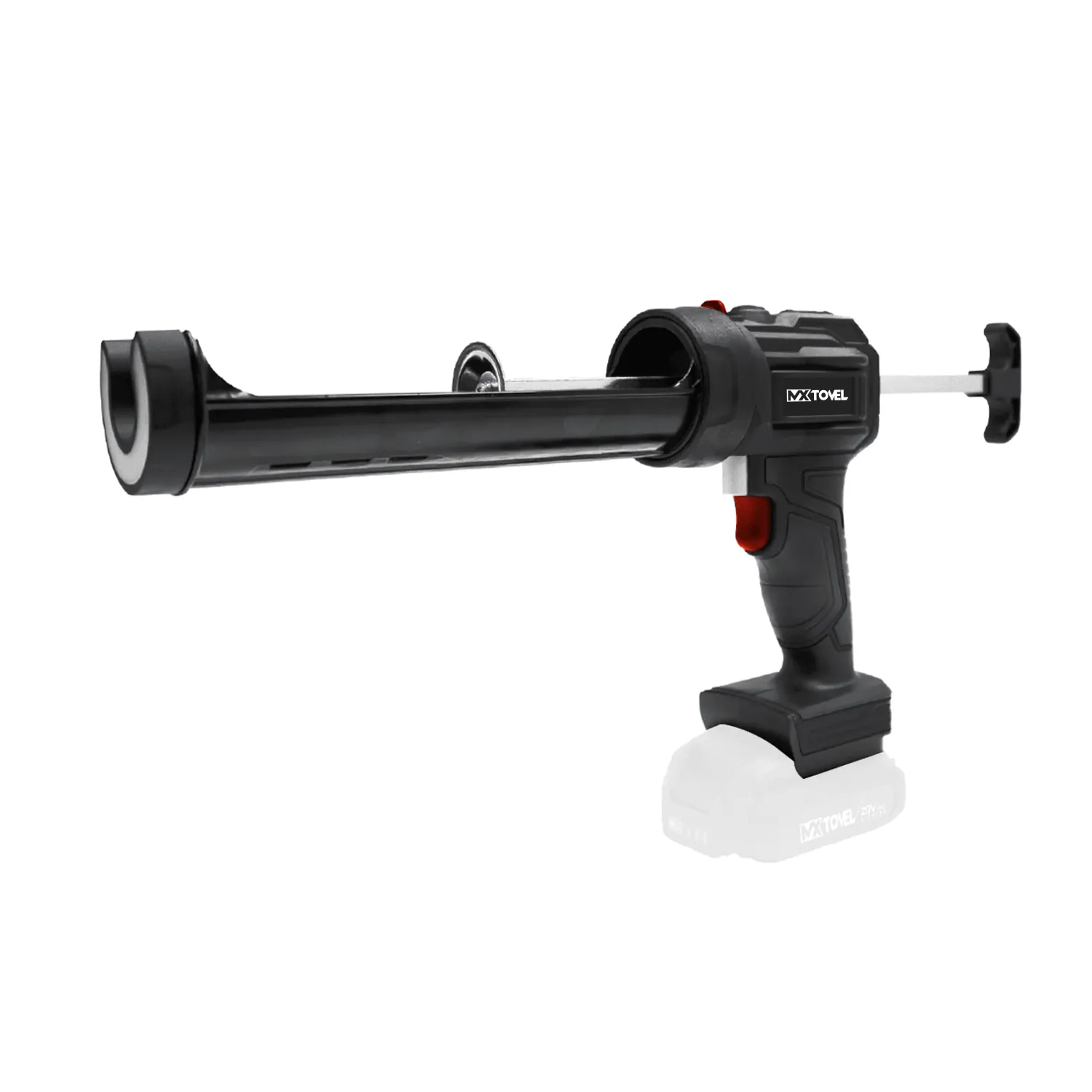
A Cordless Caulking Gun is a battery-powered tool designed to dispense caulk, sealant, adhesive, and similar materials from compatible cartridges or tubes.
Unlike a traditional manual caulking gun that requires the user to repeatedly squeeze a trigger, a cordless model uses an electric motor to push the plunger forward. This allows the material to be dispensed with less manual effort.
The user typically installs the cartridge into the tool, adjusts the dispensing speed when applicable, positions the nozzle along the required joint, and presses the trigger to begin applying the material.
Because the dispensing force is provided by the motor, a Cordless Caulking Gun is particularly useful for longer applications and repetitive sealing work.
Common applications include:
- Sealing around windows and doors
- Applying sealant in kitchens and bathrooms
- Filling construction joints and gaps
- Applying adhesives during installation
- Woodworking and furniture projects
- Automotive sealing and repair
- General home improvement
- Professional construction and installation work
For users who regularly work with sealants or adhesives, switching from a manual caulking gun to a cordless model can make repetitive dispensing tasks more convenient and easier to control.
How Does a Cordless Caulking Gun Work?
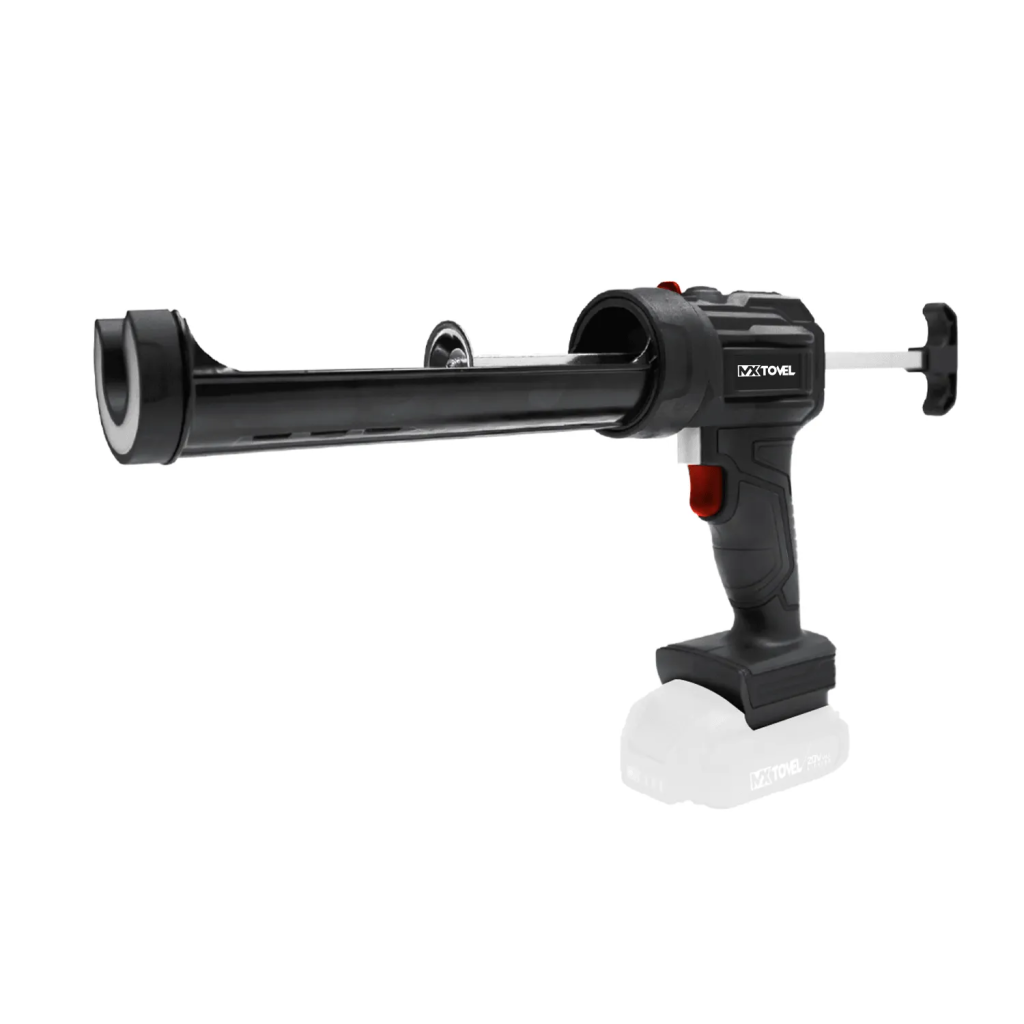
A Cordless Caulking Gun uses a battery-powered motor to move a plunger forward and apply pressure to the sealant or adhesive cartridge. Instead of repeatedly squeezing a manual trigger, the user can simply press the tool’s trigger to dispense the material.
The basic working process is simple:
- Insert the Cartridge
Place a compatible caulk, sealant, or adhesive cartridge into the holder. - Prepare the Nozzle
Cut the nozzle to the required opening size and prepare the cartridge according to the sealant manufacturer’s instructions. - Adjust the Dispensing Speed
If the Cordless Caulking Gun includes variable speed control, select a suitable setting based on the material and application. - Position the Nozzle
Place the nozzle along the joint, gap, edge, or surface where the material needs to be applied. - Press the Trigger
The motor drives the plunger forward, applying pressure to the cartridge and dispensing the material through the nozzle. - Guide the Tool Along the Joint
Move the caulking gun steadily along the application area to create a consistent bead.
This powered dispensing system can be especially useful when applying sealant over longer distances or completing repetitive sealing and installation work.
Key Features of a Cordless Caulking Gun
When choosing a Cordless Caulking Gun, several features can affect dispensing control, convenience, and overall usability.
1. Cordless Battery Power
One of the main advantages of a Cordless Caulking Gun is its battery-powered design.
Without a power cord, users can move more freely around the work area. This makes cordless models suitable for construction sites, home renovation, outdoor installation, and other locations where access to electrical outlets may be limited.
Rechargeable battery systems also make the tool convenient for mobile work and repetitive applications.
2. Variable Speed Control
Different sealants and adhesives may require different dispensing speeds.
A variable speed function allows the user to adjust the material flow according to the application. Lower settings can provide greater control for detailed sealing work, while higher settings can help when applying material along longer joints.
This makes an electric caulking gun more adaptable to different working conditions.
3. Consistent Material Flow
Maintaining a consistent bead can be difficult when using a manual caulking gun, especially during longer applications.
A battery-powered dispensing mechanism helps maintain steady pressure on the cartridge. With appropriate speed and movement, this can make it easier to produce a more consistent flow of sealant or adhesive.
Consistent application is useful for tasks such as:
- Window and door sealing
- Bathroom and kitchen joints
- Construction gaps
- Cabinet installation
- Woodworking
- General repair work
4. Reduced Manual Effort
Traditional caulking guns rely heavily on hand pressure.
During repetitive work, continuously squeezing the trigger can cause hand and wrist fatigue. A battery powered caulking gun uses its motor to provide the dispensing force, reducing the amount of manual squeezing required.
This can be particularly helpful for contractors, installers, and other users who frequently apply sealants or adhesives.
5. Anti-Drip Function
Some cordless caulking guns are designed to reduce pressure on the cartridge after the trigger is released.
This can help minimize excess material continuing to flow from the nozzle after dispensing stops.
An anti-drip design can help keep the work area cleaner and reduce unnecessary material waste.
6. Ergonomic Design
Comfort is important when using a tool for extended periods.
A well-designed Cordless Caulking Gun may include an ergonomic handle, accessible controls, and a balanced body design to make the tool easier to operate during longer sealing jobs.
These features are especially useful when working around windows, cabinets, walls, corners, and other areas that require controlled tool positioning.
7. Compatibility With Different Materials
Depending on the tool and cartridge system, a Cordless Caulking Gun can be used with different types of caulk, sealants, and adhesives.
Common materials may include:
- Silicone sealant
- Acrylic caulk
- Construction adhesive
- Polyurethane sealant
- General-purpose sealants
Always check the tool and material manufacturer’s specifications before use to ensure cartridge and material compatibility.
Why Choose a Cordless Caulking Gun?
Compared with manual dispensing, a Cordless Caulking Gun combines battery-powered operation with adjustable control and easier repetitive application.
For occasional household sealing, a manual caulking gun may be sufficient. However, when a project involves long joints, multiple cartridges, thicker materials, or repetitive applications, a cordless model can provide greater convenience.
For DIY users and professional workers alike, the ability to control material flow while reducing repeated hand squeezing makes the cordless design useful across a wide range of sealing and installation projects.
Applications of a Cordless Caulking Gun
A Cordless Caulking Gun can be used for a wide range of sealing, bonding, installation, and repair tasks. Its cordless design makes it suitable for both indoor and outdoor projects, while powered dispensing can make repetitive applications easier to manage.
Whether you are completing a DIY home improvement project or working on a professional installation, an electric caulking gun can be useful wherever controlled application of sealant or adhesive is required.
1. Window and Door Sealing
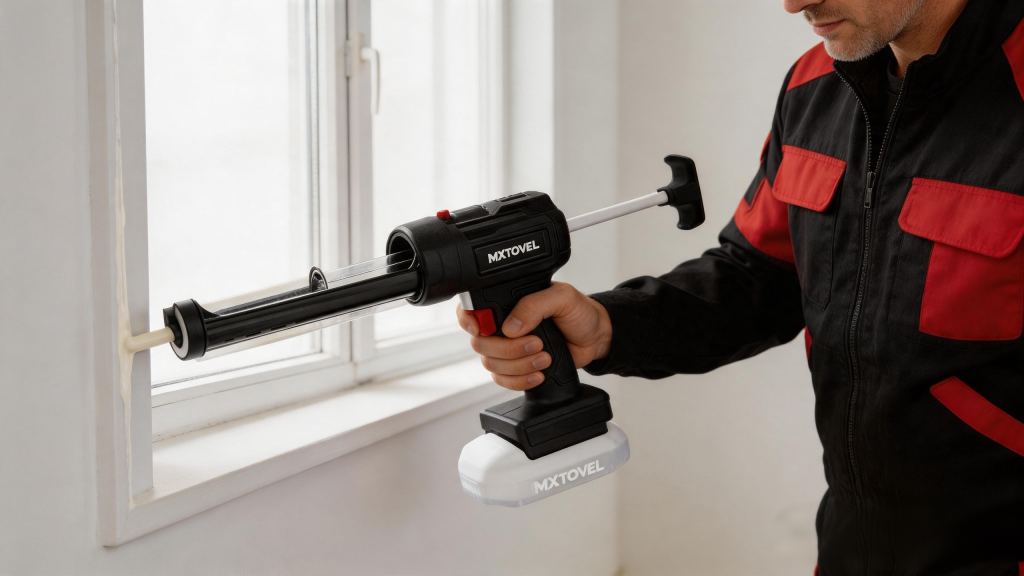
Window and door installation is one of the most common applications for a Cordless Caulking Gun.
Sealant is often applied around window frames and door frames to fill gaps and create a finished joint between different building materials.
A cordless model allows the user to move along frames without managing a power cable, making it convenient for both indoor and outdoor installation work.
Typical applications include:
- Window frame sealing
- Door frame sealing
- Filling installation gaps
- Applying sealant around exterior joints
- Home renovation projects
For longer joints, powered dispensing can also help maintain a more consistent material flow.
2. Bathroom and Kitchen Sealing
Bathrooms and kitchens contain many joints that may require caulk or sealant.
A Cordless Caulking Gun can be used to apply compatible materials around sinks, countertops, bathtubs, showers, backsplashes, and other fixtures.
Common applications include:
- Sealing around sinks
- Applying silicone around bathtubs
- Sealing shower edges
- Filling gaps around countertops
- Kitchen backsplash installation
- Sealing around plumbing fixtures
For detailed areas, using a lower dispensing speed can provide greater control over the amount of material being applied.
3. Construction and Renovation
Construction and renovation projects often involve repeated application of sealants and adhesives.
A battery powered caulking gun can reduce the manual effort required when working through multiple cartridges or applying material over long sections.
It can be useful for:
- Interior renovation
- Exterior sealing
- Filling construction joints
- Panel installation
- Trim installation
- Applying construction adhesive
- General building maintenance
The cordless design also makes it easier to move between different areas of a job site.
4. Woodworking and Furniture Installation
A Cordless Caulking Gun is not limited to traditional sealing work. Depending on material compatibility, it can also be used to dispense certain construction adhesives during woodworking and furniture installation.
Possible applications include:
- Cabinet installation
- Decorative panel installation
- Furniture assembly
- Trim and molding work
- Woodworking projects
- General adhesive application
Controlled dispensing can be especially useful when applying adhesive along longer edges or surfaces.
5. Automotive Applications
Certain automotive repair and maintenance tasks may also require sealants or adhesives.
Depending on the material and application requirements, a cordless sealant gun may be used for tasks involving compatible automotive sealants.
Applications may include:
- Applying sealant around compatible body components
- General vehicle sealing work
- Repair and maintenance applications
- Applying compatible automotive adhesives
Always verify that the sealant, cartridge, and caulking gun are suitable for the specific automotive application before use.
6. Outdoor Projects
Because there is no power cord to manage, a Cordless Caulking Gun can be particularly convenient for outdoor projects.
Users can carry the tool around the work area without needing constant access to a nearby electrical outlet.
Outdoor applications may include:
- Exterior window sealing
- Door installation
- Shed repairs
- Outdoor trim work
- Filling exterior joints
- General property maintenance
This portability can be useful for contractors and maintenance workers who regularly move between different work locations.
7. DIY and Home Improvement
A Cordless Caulking Gun can also be a practical addition to a home tool collection.
Homeowners and DIY users can use the tool for a variety of maintenance, installation, and renovation projects.
Typical DIY applications include:
- Bathroom renovation
- Kitchen renovation
- Window maintenance
- Door frame sealing
- Cabinet installation
- Decorative trim installation
- Filling gaps and joints
- General home repairs
For users who frequently complete home improvement projects, powered dispensing can make longer caulking jobs more comfortable and manageable.
Cordless Caulking Gun for DIY and Professional Use
The applications of a Cordless Caulking Gun range from simple household repairs to repetitive professional installation work.
For DIY users, the tool provides a convenient way to apply sealant without continuously squeezing a manual trigger. For contractors and installers, cordless operation can be particularly useful when working with multiple cartridges or moving between different areas of a job site.
The most suitable tool will ultimately depend on the type of material being dispensed, cartridge compatibility, required dispensing force, speed control, battery system, and the scale of the project.
How to Use a Cordless Caulking Gun
Using a Cordless Caulking Gun is relatively straightforward, but proper preparation and control are important for achieving a clean and consistent application.
Before starting, always read the instructions provided with both the caulking gun and the sealant or adhesive being used.
Step 1: Choose the Right Sealant or Adhesive
Start by selecting a material that is suitable for your project.
Different applications may require different materials, such as silicone sealant, acrylic caulk, polyurethane sealant, or construction adhesive.
Before installation, check that the cartridge size and material are compatible with your Cordless Caulking Gun.
Step 2: Prepare the Cartridge
Prepare the cartridge according to the material manufacturer’s instructions.
Depending on the cartridge, this may involve cutting the nozzle to the desired opening size and puncturing an internal seal.
The size and angle of the nozzle opening can affect the width and shape of the bead, so choose an opening that matches the joint you are working on.
Step 3: Install the Cartridge
Retract the plunger rod and place the prepared cartridge securely into the holder.
Make sure the cartridge is positioned correctly before moving the plunger forward.
Do not force an incompatible cartridge into the tool.
Step 4: Install the Battery
Attach a compatible battery to the Cordless Caulking Gun and make sure it is properly locked into position.
Before beginning work, check that the battery has enough charge for the planned application.
For larger projects, having an additional charged battery available may help reduce interruptions.
Step 5: Select the Dispensing Speed
If your Cordless Caulking Gun features variable speed control, begin with a lower setting.
A lower speed can make it easier to control the material when working on short joints, corners, or detailed areas.
The dispensing speed can then be adjusted according to the material, bead size, and working pace.
Step 6: Position the Nozzle
Place the nozzle at the beginning of the joint.
Hold the tool at a comfortable and consistent angle so that the material can enter the joint evenly.
The ideal angle may vary depending on the application and material being used.
Step 7: Press the Trigger
Press the trigger gradually to begin dispensing the material.
Allow the electric caulking gun to establish a consistent flow before moving along the joint.
Avoid moving too quickly, as this may produce an uneven or incomplete bead.
Step 8: Move at a Consistent Speed
Guide the nozzle steadily along the joint while maintaining a consistent working speed.
Try to coordinate the movement of the tool with the dispensing rate.
If too much material is being applied, reduce the dispensing speed or move slightly faster. If the bead is too thin, adjust accordingly.
Step 9: Release the Trigger
Release the trigger when you reach the end of the joint.
If the tool includes an anti-drip or pressure-release function, the mechanism may help reduce continued material flow after the trigger is released.
Remove excess material around the nozzle when necessary.
Step 10: Smooth the Caulk or Sealant
Depending on the material and application, the bead may need to be smoothed before it begins to cure.
Follow the sealant manufacturer’s recommendations regarding tooling, smoothing, curing time, and cleanup.
Tips for Getting a Cleaner Caulk Line
Even with a Cordless Caulking Gun, good results depend on preparation and technique.
A few simple practices can help improve application quality:
- Clean and dry the surface before applying material.
- Remove old or loose caulk when necessary.
- Select an appropriate nozzle opening.
- Start with a lower dispensing speed.
- Maintain a consistent tool angle.
- Move steadily along the joint.
- Avoid applying unnecessary amounts of material.
- Smooth the bead according to the material instructions.
- Clean the nozzle and tool after use.
For visible joints around countertops, sinks, windows, or bathroom fixtures, masking tape can also be used when appropriate to help create cleaner edges.
Cordless Caulking Gun Safety Tips
Although a Cordless Caulking Gun is designed to make dispensing easier, users should still follow basic safety practices.
Read the Instructions
Always read the manufacturer’s instructions before operating the tool.
Controls, cartridge compatibility, battery requirements, and operating procedures can vary between different models.
Wear Appropriate Protective Equipment
Use appropriate personal protective equipment based on the material and working environment.
Depending on the application, this may include:
- Safety glasses
- Protective gloves
- Suitable work clothing
Some sealants and adhesives may also require adequate ventilation or additional precautions. Always follow the safety information supplied by the material manufacturer.
Remove the Battery Before Adjustments
Remove the battery before installing or removing cartridges, cleaning the tool, clearing material, or performing maintenance when instructed by the manufacturer.
This helps reduce the risk of accidental activation.
Keep Hands Away From Moving Components
Keep fingers and hands away from the plunger mechanism and other moving components while the Cordless Caulking Gun is operating.
Never attempt to manually interfere with the mechanism while the trigger is pressed.
Do Not Exceed Tool Compatibility
Use only cartridges, materials, batteries, and accessories that are compatible with the tool.
Materials that are too thick or otherwise unsuitable for the dispensing system may affect performance or potentially damage the tool.
Keep the Work Area Clean
A clean working area can help reduce accidental slips, contamination, and unnecessary cleanup.
Remove excess sealant from the tool according to the manufacturer’s instructions before it cures.
Proper Technique Makes a Difference
A Cordless Caulking Gun can reduce repetitive manual effort, but good application technique remains important.
Choosing the correct material, preparing the surface, adjusting the dispensing speed, and moving the tool consistently can all contribute to a cleaner and more controlled result.
With proper setup and operation, a cordless caulking gun can be used effectively for home improvement, installation, construction, maintenance, and other sealing or adhesive applications.
How to Choose the Right Cordless Caulking Gun
Choosing the right Cordless Caulking Gun depends on the materials you plan to use, the type of work you perform, and how frequently you use the tool.
A DIY user completing occasional home repairs may have different requirements from a contractor who regularly works with sealants and adhesives.
Before choosing a cordless caulking gun, consider the following factors.
1. Cartridge Compatibility
One of the first things to check is cartridge compatibility.
Caulk, sealants, and adhesives are available in different cartridge sizes and packaging formats. The tool should be compatible with the cartridges commonly used for your projects.
Before purchasing, check:
- Supported cartridge type
- Supported cartridge size
- Holder configuration
- Material compatibility
Choosing the correct cartridge system helps ensure proper installation and dispensing.
2. Dispensing Force
Different materials have different viscosities.
Some lightweight caulks are relatively easy to dispense, while thicker adhesives and sealants may require greater pushing force.
The dispensing capability of a Cordless Caulking Gun should therefore match the materials you intend to use.
For professional buyers or frequent users, this is particularly important because the tool may need to handle different materials across multiple applications.
Avoid selecting a tool based only on the highest force specification. Compatibility with your actual materials and applications is more important.
3. Variable Speed Control
Variable speed is a useful feature for controlling material flow.
Different applications may require different dispensing rates. For example, detailed sealing around a bathroom fixture may benefit from slower dispensing, while a long construction joint may require a different setting.
A Cordless Caulking Gun with variable speed control gives the user greater flexibility when working with different materials and bead sizes.
4. Battery Platform
Battery compatibility is another important consideration when choosing a battery powered caulking gun.
If you already use other cordless tools, choosing a caulking gun that works with the same battery platform can make battery management more convenient.
Consider:
- Battery voltage
- Battery compatibility
- Battery capacity
- Charging requirements
- Availability of replacement batteries
For professional users, having multiple compatible batteries may also help reduce downtime during longer projects.
5. Anti-Drip Design
Sealant continuing to flow after the trigger is released can create unnecessary mess and material waste.
An anti-drip or pressure-release mechanism is designed to reduce pressure on the cartridge when dispensing stops.
This feature can be particularly useful when working on:
- Short joints
- Corners
- Window frames
- Bathroom fixtures
- Decorative applications
- Detailed installation work
For users who frequently stop and restart during application, an anti-drip design can provide additional control.
6. Ergonomics and Tool Balance
A Cordless Caulking Gun may be used for extended periods, so comfort and balance should not be overlooked.
Consider the shape of the handle, trigger position, overall tool weight, and balance when the battery and cartridge are installed.
A comfortable grip and balanced design can make the tool easier to control during repetitive applications.
This becomes especially important when working overhead, around window frames, or in areas where the tool must be held at an awkward angle.
7. Trigger Control
The trigger is one of the main controls used during operation.
A responsive trigger can help the user start and stop dispensing more precisely.
Combined with variable speed settings, good trigger control can make an electric caulking gun easier to manage across different applications.
8. Tool Size and Weight
Larger tools may provide capabilities suited to demanding applications, but they can also be heavier.
Smaller models may be easier to carry and position in confined spaces.
When comparing cordless caulking guns, think about where the tool will normally be used.
For example:
- Home repair may prioritize portability.
- Construction work may prioritize durability and material compatibility.
- Installation work may require a balance between power and maneuverability.
- Repetitive professional use may place greater importance on ergonomics.
The right choice depends on the working environment rather than tool size alone.
9. Build Quality
Construction quality is particularly important for tools used regularly on job sites.
A Cordless Caulking Gun should be designed to withstand normal working conditions while keeping the cartridge securely positioned during application.
For wholesalers, importers, and professional tool buyers, build quality is also an important factor when evaluating products for repeated or commercial use.
10. Ease of Cartridge Replacement
Users who work through multiple cartridges may need to replace them frequently.
A practical cartridge-loading system can make replacement faster and easier.
Before choosing a tool, consider how the plunger retracts, how the cartridge is secured, and how easily an empty cartridge can be removed.
This is especially relevant for repetitive sealing and installation jobs.
Cordless Caulking Gun for DIY Users
For DIY and household applications, users may want to prioritize:
- Simple operation
- Comfortable handling
- Adjustable dispensing speed
- Convenient battery operation
- Common cartridge compatibility
- Easy cartridge replacement
These features can make a cordless caulk gun suitable for bathroom repairs, kitchen renovation, window sealing, furniture installation, and other home improvement projects.
Cordless Caulking Gun for Professional Users
Contractors and professional installers may place greater emphasis on:
- Consistent dispensing
- Material compatibility
- Appropriate dispensing force
- Variable speed control
- Battery system compatibility
- Ergonomic design
- Durability
- Efficient cartridge replacement
For repetitive applications, reducing manual effort can also be an important consideration.
A battery powered caulking gun can be particularly useful for workers who regularly apply multiple cartridges during construction, renovation, or installation projects.
Cordless Caulking Gun for Wholesale Buyers
Wholesalers, distributors, and importers may need to evaluate a cordless caulking gun from a broader perspective.
In addition to individual tool performance, buyers may want to consider:
- Target market requirements
- Battery platform
- Available configurations
- Product quality control
- Packaging options
- Accessory options
- OEM/ODM capabilities
- Manufacturer production capacity
- After-sales support
For B2B buyers, choosing the right Cordless Caulking Gun is not only about individual specifications. Product positioning, manufacturing consistency, customization options, and supplier capabilities can also influence the purchasing decision.
Which Cordless Caulking Gun Should You Choose?
There is no single configuration that is suitable for every application.
For occasional home repairs, convenient operation and basic speed control may be sufficient. For regular construction and installation work, material compatibility, dispensing performance, battery convenience, and ergonomics become more important.
Before purchasing a Cordless Caulking Gun, identify the materials you commonly use, cartridge format, expected workload, and working environment.
Matching the tool to the actual application is more useful than simply choosing based on one specification.
Cordless Caulking Gun vs. Manual Caulking Gun
Both cordless and manual caulking guns are designed to dispense caulk, sealants, and compatible adhesives. However, the way they operate and the types of projects they are best suited for can be different.
A manual caulking gun relies on hand pressure to move the plunger, while a Cordless Caulking Gun uses a battery-powered motor to provide the dispensing force.
Understanding these differences can help users choose a suitable option based on their workload and application requirements.
| Feature | Cordless Caulking Gun | Manual Caulking Gun |
| Power Source | Rechargeable battery | Manual operation |
| Dispensing Method | Motor-driven | Hand pressure |
| Manual Effort | Lower | Higher |
| Speed Control | Available on many models | Controlled manually |
| Long Applications | Convenient | Requires repeated squeezing |
| Portability | Cordless and portable | Portable |
| Tool Weight | Generally heavier | Generally lighter |
| Maintenance | Battery and tool maintenance | Simple maintenance |
| Suitable For | Repetitive and longer applications | Occasional and smaller jobs |
1. Power and Dispensing
The biggest difference between the two tools is how the material is pushed from the cartridge.
With a manual caulking gun, the user repeatedly squeezes the trigger to move the plunger forward.
A battery powered caulking gun uses an electric motor to provide this force. Once the trigger is activated, the motor moves the plunger and dispenses the material.
This powered mechanism can be particularly useful when working with multiple cartridges or completing long sealing jobs.
2. Application Control
Both tools can provide good application control when used correctly, but they achieve it differently.
A manual caulking gun relies heavily on the user’s hand pressure and movement speed.
Many cordless models combine powered dispensing with variable speed settings. This allows users to adjust the flow rate according to the material and application.
For detailed work, a lower speed can provide additional control. For longer joints, the user can select a setting that matches the desired working pace.
3. Hand Fatigue
Repeatedly squeezing a manual trigger can become tiring during larger projects.
This may not be a major issue when applying a small amount of caulk around a sink or window. However, the difference becomes more noticeable when working through multiple cartridges.
A Cordless Caulking Gun reduces the need for repeated manual squeezing because the motor provides the dispensing force.
For installers, contractors, and other frequent users, this can make repetitive sealing work more comfortable.
4. Portability
Both manual and cordless caulking guns are portable.
A manual model does not require a battery, while a cordless model allows powered operation without needing a power cable or electrical outlet.
This makes an electric caulking gun convenient for:
- Construction sites
- Outdoor installation
- Window and door projects
- Renovation work
- Mobile repair work
- Areas without convenient access to electrical outlets
However, users should make sure the battery is sufficiently charged before starting a larger project.
5. Tool Weight
Manual caulking guns are generally simpler and lighter because they do not require a motor or battery.
A Cordless Caulking Gun contains additional components, including a motor, drive mechanism, and battery.
As a result, tool weight and balance become more important when selecting a cordless model, especially for users who regularly work for extended periods.
6. Repetitive Applications
For occasional household sealing, a manual caulking gun can be a practical solution.
For repetitive applications, however, powered dispensing becomes more useful.
A cordless model may be better suited for tasks such as:
- Installing multiple windows
- Sealing multiple door frames
- Applying long beads of construction sealant
- Cabinet installation
- Repetitive renovation work
- Professional construction projects
The larger the workload, the more noticeable the convenience of powered dispensing may become.
7. Cost Considerations
Manual caulking guns usually have a simpler design and lower initial purchase cost.
Cordless models include a motor, electronic components, and a battery system, which generally makes the initial investment higher.
However, purchase price should not be the only consideration.
For professional users, factors such as workload, frequency of use, application control, battery compatibility, and reduced manual effort may also affect the overall value of the tool.
When Should You Choose a Manual Caulking Gun?
A manual model may be suitable if:
- You only use caulk occasionally.
- Your projects are relatively small.
- You normally apply only one cartridge or a small amount of material.
- You prefer a simple tool without batteries.
- Tool weight and initial cost are important considerations.
For simple household maintenance, a manual tool may provide everything the user needs.
When Should You Choose a Cordless Caulking Gun?
A Cordless Caulking Gun may be more suitable if:
- You frequently work with caulk, sealants, or adhesives.
- You regularly complete long sealing applications.
- You use multiple cartridges during a project.
- You want to reduce repetitive hand squeezing.
- You need adjustable dispensing control.
- You work in construction, renovation, or installation.
- You already use compatible cordless power tools and batteries.
For these applications, a cordless model can provide a practical combination of mobility, powered dispensing, and application control.
Cordless or Manual: Which Is Better for Your Project?
Neither type is automatically the right choice for every user.
A manual caulking gun offers simplicity, low weight, and easy portability, making it suitable for occasional applications.
A Cordless Caulking Gun, on the other hand, provides motor-driven dispensing and can reduce repetitive manual effort. These characteristics make it particularly useful for longer projects and frequent professional applications.
The right choice depends on how often you use the tool, the type of materials you work with, the length of the application, and your preferred working method.
Cordless Caulking Gun Maintenance and Care
Proper maintenance can help keep a Cordless Caulking Gun clean, functional, and ready for the next project.
Caulk, sealant, and adhesive can harden after exposure to air, so cleaning the tool after use is especially important. Regular inspection of the cartridge holder, plunger, battery, and other components can also help identify potential problems before the next application.
Always follow the maintenance and cleaning instructions provided by the tool and material manufacturers.
How to Clean a Cordless Caulking Gun
Cleaning should be performed as soon as practical after completing the application.
Fresh sealant is generally easier to remove than material that has already cured.
1. Remove the Battery
Before cleaning, adjusting, or inspecting the Cordless Caulking Gun, remove the battery when instructed by the manufacturer.
Make sure the trigger cannot be accidentally activated during cleaning.
2. Remove the Cartridge
Retract the plunger and carefully remove the cartridge from the holder.
If the cartridge still contains usable material, store or seal it according to the material manufacturer’s instructions.
Avoid leaving leaking cartridges inside the tool.
3. Remove Excess Material
Check the cartridge holder, plunger, nozzle area, and surrounding surfaces for excess caulk, sealant, or adhesive.
Remove fresh material using a cleaning method that is suitable for the specific sealant or adhesive.
Different materials may require different cleanup methods, so always follow the instructions provided by the material manufacturer.
4. Inspect the Plunger
The plunger transfers force from the tool to the cartridge and should move correctly during operation.
After use, check it for:
- Hardened sealant
- Adhesive residue
- Dirt or debris
- Visible damage
- Unusual movement
Keeping the plunger area clean can help maintain smooth operation.
5. Clean the Cartridge Holder
Sealant may occasionally leak or collect inside the cartridge holder.
Remove residue before it cures whenever possible.
A clean holder also makes it easier to install the next cartridge correctly.
Prevent Sealant From Hardening on the Tool
One of the most important maintenance practices is preventing material from curing on the electric caulking gun.
Once certain adhesives or sealants harden, they can become much more difficult to remove.
After each project:
- Check the tool for material residue.
- Clean spills promptly.
- Inspect the plunger and cartridge holder.
- Remove material around the front of the cartridge area.
- Do not allow large amounts of adhesive to cure on moving components.
Avoid using aggressive cleaning chemicals unless they are approved for both the tool and the material being removed.
Battery Care
The battery is an important part of any battery powered caulking gun.
Proper battery care can help maintain reliable cordless operation.
General battery practices include:
- Use compatible batteries and chargers.
- Keep battery contacts clean and dry.
- Protect batteries from excessive heat and moisture.
- Avoid storing batteries where they may be physically damaged.
- Follow the manufacturer’s charging instructions.
- Inspect the battery for visible damage before use.
Battery requirements can vary between manufacturers and battery platforms, so always follow the instructions supplied with your specific battery system.
Inspect the Tool Before Use
A quick inspection before each project can help identify visible problems.
Before operating a Cordless Caulking Gun, check:
- Cartridge holder
- Plunger mechanism
- Trigger
- Speed control
- Battery connection
- Handle and housing
- Moving components
If any component appears damaged or does not operate normally, stop using the tool and follow the manufacturer’s inspection or service recommendations.
Proper Storage
When the project is finished, store the Cordless Caulking Gun in a clean and dry location.
Avoid leaving the tool exposed to excessive moisture, dust, direct heat, or conditions outside the manufacturer’s recommended storage range.
Before storage:
- Remove the cartridge when appropriate.
- Clean excess sealant or adhesive.
- Inspect the tool.
- Store the battery according to its instructions.
- Place the tool in a secure location.
Proper storage is especially important for tools that may not be used again for several weeks or months.
Common Cordless Caulking Gun Problems
Even with proper maintenance, users may occasionally experience dispensing problems.
Material Is Not Dispensing
If material does not come out of the nozzle, possible causes may include:
- The cartridge seal has not been opened.
- The nozzle is blocked.
- The material has hardened.
- The battery needs charging.
- The dispensing speed is set too low.
- The material or cartridge is not compatible with the tool.
Stop operation before inspecting the tool or cartridge.
Material Flows Too Quickly
If too much material is being dispensed, reduce the speed setting when the tool provides adjustable speed control.
The user may also need to adjust their movement speed or nozzle opening.
Material Continues Flowing After Trigger Release
A small amount of material may continue moving because pressure remains inside the cartridge.
If the Cordless Caulking Gun includes an anti-drip or pressure-release function, make sure it is operating according to the manufacturer’s instructions.
Uneven Caulk Bead
An inconsistent bead does not always indicate a problem with the tool.
Possible causes include:
- Inconsistent movement speed
- Incorrect speed setting
- Poor surface preparation
- An unsuitable nozzle opening
- Material characteristics
- Incorrect tool angle
Adjusting the application technique can often improve the result.
Regular Maintenance for Reliable Operation
A Cordless Caulking Gun does not necessarily require complicated maintenance, but regular cleaning and inspection are important.
Removing sealant before it cures, keeping the plunger and cartridge holder clean, caring for the battery, and storing the tool properly can help keep it ready for future projects.
For professional users who work with sealants and adhesives regularly, establishing a simple cleaning routine after each job can also reduce unnecessary interruptions between applications.
Why Choose MXTOVEL Cordless Caulking Gun?
Choosing a Cordless Caulking Gun involves more than comparing individual specifications. For distributors, wholesalers, importers, and professional tool buyers, product consistency, manufacturing capabilities, customization options, and supplier support can also be important considerations.
MXTOVEL focuses on providing power tools for different markets and applications. A cordless caulking gun can complement a broader cordless tool range for construction, installation, renovation, maintenance, and DIY projects.
For buyers looking for cordless power tool solutions, MXTOVEL combines product development with manufacturing and supply capabilities to support different purchasing requirements.
Cordless Design for Flexible Applications
The cordless design gives users greater freedom to move around the work area without depending on a nearby power outlet.
An MXTOVEL Cordless Caulking Gun can be considered for applications such as:
- Window and door installation
- Bathroom and kitchen sealing
- Construction projects
- Interior renovation
- Adhesive application
- Furniture and cabinet installation
- General maintenance
- DIY home improvement
Battery-powered operation is particularly convenient when users need to move between different work areas.
Focus on Practical Tool Design
A useful Cordless Caulking Gun should provide more than powered dispensing.
Tool balance, handling, cartridge installation, operating controls, and material flow all influence the user experience.
MXTOVEL focuses on practical power tool solutions designed around real working applications. Depending on the specific product configuration, features and specifications can be selected according to different market requirements.
Buyers should always confirm the specifications of the individual model before placing an order.
MXTOVEL Power Tool Manufacturing
MXTOVEL has been involved in the tool industry since 2014, supplying power tools, garden tools, hand tools, and related products to international markets.
The company focuses on areas including:
- Product development
- Manufacturing
- Quality inspection
- Product testing
- Supply chain management
- International market support
For professional buyers, working with a power tool supplier that can support multiple product categories can simplify sourcing and help create a more consistent product portfolio.
Quality Control and Product Testing
Quality control is an important consideration when sourcing cordless power tools.
For a Cordless Caulking Gun, buyers may need to evaluate areas such as:
- Tool operation
- Dispensing mechanism
- Trigger response
- Battery connection
- Housing and assembly
- Cartridge installation
- General product consistency
Product requirements may differ according to model, target market, order quantity, and application.
For B2B purchasing, buyers can communicate specific quality, testing, packaging, and product requirements before confirming an order.
OEM and ODM Cordless Caulking Gun Solutions
Different markets may require different product configurations.
MXTOVEL can work with B2B customers on OEM and ODM power tool projects according to specific purchasing requirements and available manufacturing options.
Depending on the project, customization requirements may involve areas such as:
- Product appearance
- Brand logo
- Packaging
- Product configuration
- Accessories
- Manuals
- Market positioning
OEM/ODM availability and specific customization options should be confirmed according to the individual project.
This can be useful for:
- Power tool brands
- Importers
- Distributors
- Wholesalers
- Retailers
- Hardware suppliers
- Professional tool buyers
Cordless Tool Product Range
For buyers building a broader cordless tool portfolio, a Cordless Caulking Gun can be sourced alongside other tools for drilling, fastening, cutting, grinding, construction, and home improvement applications.
A broader cordless product range can help distributors and wholesalers serve different customer groups, including DIY users, homeowners, installers, technicians, and professional workers.
For B2B buyers, sourcing multiple categories from the same supplier may also make communication, product planning, and purchasing management more convenient.
Supporting International Tool Buyers
Tool requirements vary between countries and markets.
Product configuration, packaging, documentation, accessories, and positioning may need to be adjusted according to the target customer and distribution channel.
MXTOVEL works with international customers and supplies tools to markets including Europe, North America, South America, Australia, and other regions.
Buyers interested in a Cordless Caulking Gun or other cordless tools can communicate their target market, application, required configuration, and purchasing requirements before confirming a suitable solution.
Who Can Work With MXTOVEL?
MXTOVEL power tool solutions may be suitable for different types of B2B customers, including:
- Tool wholesalers
- Importers
- Distributors
- Hardware retailers
- Online sellers
- Construction tool suppliers
- Private-label brands
- Professional purchasing teams
Whether you are adding a Cordless Caulking Gun to an existing product range or developing a broader cordless tool line, product specifications and sourcing requirements can be discussed according to your target market.
Looking for a Cordless Caulking Gun Supplier?
When sourcing a Cordless Caulking Gun, buyers should evaluate not only the tool itself but also the supplier behind the product.
Product consistency, manufacturing capability, communication, customization, packaging, and supply support can all influence a long-term sourcing project.
If you are looking for a Cordless Caulking Gun manufacturer or supplier, MXTOVEL can provide product information and discuss available solutions based on your market and purchasing requirements.
Contact MXTOVEL to learn more about cordless caulking guns, OEM/ODM options, wholesale inquiries, and other cordless power tool solutions.
Frequently Asked Questions About Cordless Caulking Guns
Below are some common questions about choosing, using, and maintaining a Cordless Caulking Gun.
1. What Is a Cordless Caulking Gun Used For?
A Cordless Caulking Gun is used to dispense compatible caulk, sealants, and adhesives from cartridges or other supported containers.
Common applications include window and door sealing, bathroom and kitchen projects, construction joints, cabinet installation, renovation work, and general home maintenance.
Because the dispensing force is provided by a battery-powered motor, the tool can be particularly convenient for longer or repetitive applications.
2. Is a Cordless Caulking Gun Worth It?
Whether a Cordless Caulking Gun is worth purchasing depends on how frequently you apply sealants or adhesives.
For occasional small household repairs, a manual caulking gun may be sufficient.
A cordless model becomes more useful when you:
- Regularly use multiple cartridges
- Work on long sealing joints
- Complete repetitive installation projects
- Want to reduce repeated hand squeezing
- Need adjustable material flow
- Frequently perform construction or renovation work
Professional installers and contractors may find powered dispensing especially useful for repetitive applications.
3. What Can You Put in a Cordless Caulking Gun?
Depending on the model and cartridge system, a Cordless Caulking Gun may work with materials such as:
- Silicone sealant
- Acrylic caulk
- Polyurethane sealant
- Construction adhesive
- General-purpose sealants
- Other compatible cartridge-based materials
Compatibility varies between tools and materials. Always check the specifications of both the caulking gun and the material before use.
4. Can You Use Construction Adhesive in a Cordless Caulking Gun?
Some cordless caulking guns can dispense compatible construction adhesives.
However, construction adhesives can vary considerably in viscosity. Thicker materials may require different dispensing capabilities than standard caulk.
Before use, confirm that the electric caulking gun is suitable for the cartridge and material you intend to dispense.
5. What Is the Difference Between a Cordless and Manual Caulking Gun?
The main difference is the dispensing mechanism.
A manual caulking gun requires the user to repeatedly squeeze the trigger to push material from the cartridge.
A Cordless Caulking Gun uses a battery-powered motor to move the plunger. This reduces repeated manual squeezing and can make longer applications easier to manage.
Manual models are simple and lightweight, while cordless models are often better suited to frequent or repetitive applications.
6. How Do You Control the Flow on a Cordless Caulking Gun?
Many cordless models provide adjustable dispensing speed.
Users can select a suitable setting based on the material, nozzle opening, bead size, and application.
Starting at a lower setting can make it easier to understand how quickly the material flows before increasing the dispensing speed.
Consistent movement of the tool is also important for producing an even bead.
7. Does a Cordless Caulking Gun Prevent Dripping?
Some Cordless Caulking Gun models include an anti-drip or pressure-release mechanism.
This type of feature is designed to reduce pressure on the cartridge after the trigger is released, helping minimize continued material flow.
The exact operation varies by model, so check the product specifications and instructions for details.
8. How Do You Clean a Cordless Caulking Gun?
Remove excess sealant or adhesive as soon as practical after use.
Pay particular attention to the:
- Cartridge holder
- Plunger
- Front cartridge area
- Other surfaces exposed to the material
Use a cleaning method appropriate for the specific caulk, sealant, or adhesive.
Remove the battery before cleaning or maintenance when instructed by the tool manufacturer.
9. Can Beginners Use a Cordless Caulking Gun?
Yes. A Cordless Caulking Gun can be suitable for DIY users as well as professionals.
Beginners should start with a lower dispensing speed and practice on a test surface when possible.
Learning how dispensing speed, nozzle size, tool movement, and material viscosity affect the bead can help improve application control.
10. What Should I Look for When Buying a Cordless Caulking Gun?
Important factors can include:
- Cartridge compatibility
- Material compatibility
- Dispensing capability
- Variable speed control
- Battery compatibility
- Anti-drip design
- Tool weight
- Ergonomics
- Ease of cartridge replacement
- Build quality
The most suitable Cordless Caulking Gun depends on the materials you use and the type of projects you normally complete.
11. Are Cordless Caulking Guns Good for Professional Use?
A battery powered caulking gun can be particularly useful for professional users who regularly work with sealants or adhesives.
Construction workers, installers, maintenance teams, and contractors may benefit from reduced manual squeezing and powered material dispensing during repetitive applications.
Professional buyers should also consider battery systems, durability, material compatibility, and the expected daily workload when selecting a tool.
12. How Do I Choose a Cordless Caulking Gun Supplier?
For wholesale or commercial purchasing, buyers should evaluate more than the individual tool specifications.
Important supplier considerations may include:
- Manufacturing capabilities
- Product consistency
- Quality control
- Available product configurations
- OEM/ODM options
- Packaging capabilities
- Communication
- Supply support
- Product range
For importers, distributors, wholesalers, and private-label brands, these factors can be important when establishing a long-term sourcing relationship.
13. Where Can I Buy a Cordless Caulking Gun in Bulk?
Businesses looking to purchase a Cordless Caulking Gun in bulk can work with manufacturers, power tool suppliers, distributors, or wholesale partners.
Before placing a bulk order, buyers should confirm product specifications, order requirements, packaging, customization options, and target-market requirements.
MXTOVEL works with B2B tool buyers and can discuss available cordless power tool solutions according to specific sourcing requirements.
Conclusion
A Cordless Caulking Gun provides a convenient and efficient way to apply caulk, sealants, and compatible adhesives across a wide range of projects. Compared with a traditional manual caulking gun, battery-powered dispensing reduces the need for repeated hand squeezing and can make long or repetitive applications easier to manage.
From window and door sealing to bathroom renovation, construction, cabinet installation, woodworking, and general maintenance, a Cordless Caulking Gun can be a practical tool for both DIY users and professional workers.
When choosing the right model, consider factors such as cartridge compatibility, material viscosity, dispensing capability, variable speed control, battery compatibility, anti-drip design, ergonomics, and overall build quality. The right tool should match the materials you use and the type of work you perform rather than simply focusing on a single specification.
For wholesalers, distributors, importers, retailers, and private-label brands, supplier capabilities are also an important part of the purchasing decision.
MXTOVEL provides cordless power tool solutions for international markets and works with B2B customers on different sourcing requirements. Buyers interested in a Cordless Caulking Gun can discuss product configurations, packaging, OEM/ODM requirements, and wholesale purchasing options according to their target market.
Whether you are expanding an existing cordless tool range or sourcing a new caulking solution, MXTOVEL can help you explore suitable options for your business.
Looking for a Cordless Caulking Gun Manufacturer or Supplier?
If you are searching for a Cordless Caulking Gun manufacturer, wholesale supplier, or OEM/ODM power tool partner, contact MXTOVEL for more product and sourcing information.
MXTOVEL — Power Your Projects.