A Cordless Jig Saw is a versatile cutting tool designed for straight, curved, and bevel cuts in a wide range of materials. Because it runs on a rechargeable battery, it gives users greater freedom of movement without the limitations of a power cord. Whether you are cutting a wooden panel, trimming laminate, creating a curved shape, or working at a jobsite without convenient power access, a cordless jig saw can make the task faster and easier.
For DIY users, woodworkers, installers, and professional contractors, the combination of portability and cutting control makes this tool a valuable addition to a modern toolbox. In this guide, we explain how a cordless jig saw works, where it can be used, how to choose the right blade, and what to consider before purchasing one.
What Is a Cordless Jig Saw?
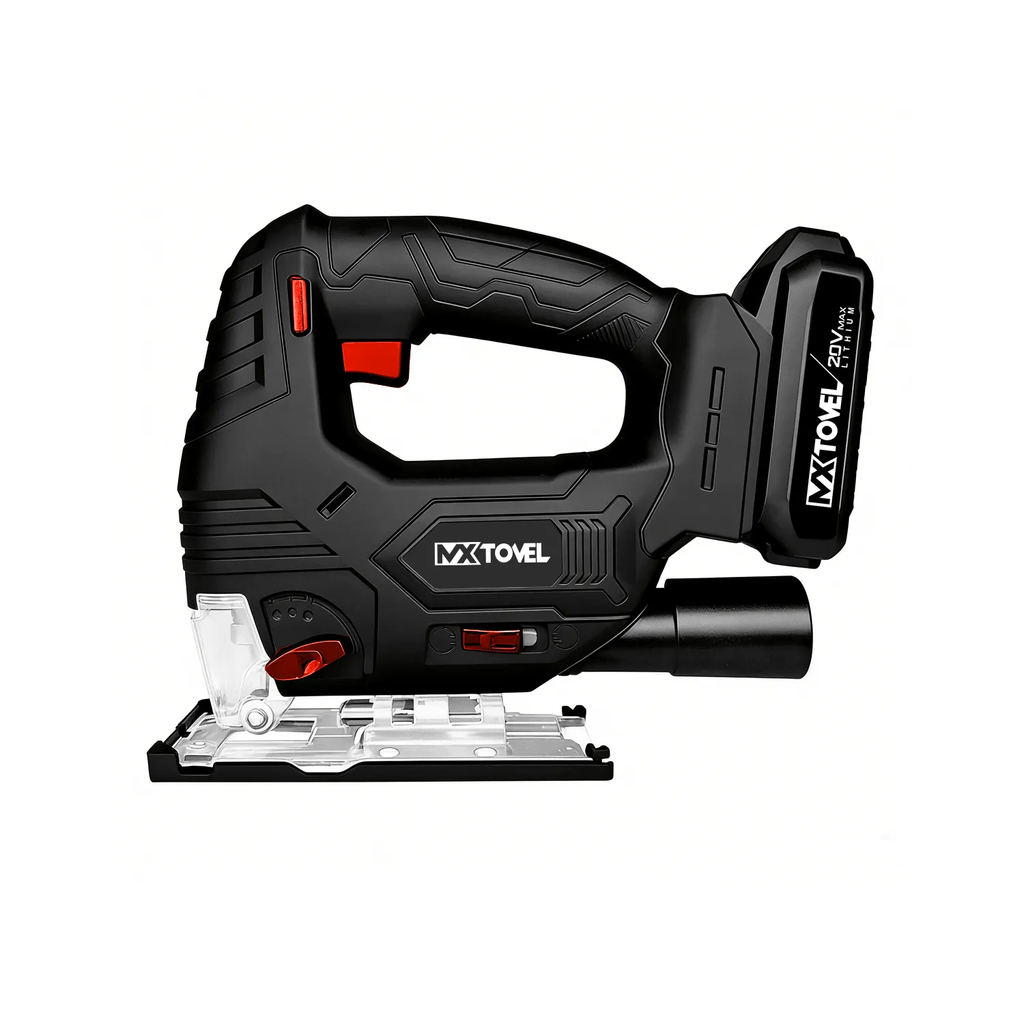
A cordless jig saw is a battery-powered saw that uses a narrow reciprocating blade. The blade moves rapidly up and down to cut through the workpiece. Its slim blade can follow curved lines more easily than many circular cutting tools, while the tool’s base plate helps it remain stable during operation.
Unlike a corded jig saw, a cordless model does not need to remain connected to a wall outlet. This makes it especially convenient for outdoor work, mobile jobs, renovation projects, and areas where a cable may get in the way.
It is important to understand that cordless describes the power source. A cordless jig saw may use either a brushed or brushless motor. If a model is both battery-powered and equipped with a brushless motor, it can be described as a Brushless Cordless Jig Saw.
What Can a Cordless Jig Saw Cut?
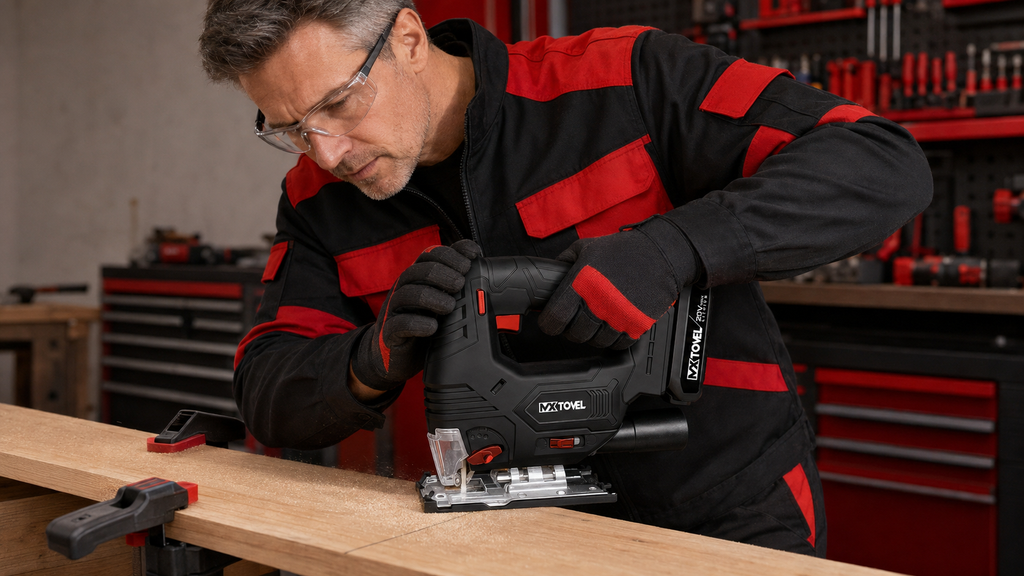
With the correct blade, a cordless jig saw can be used on several materials. Common applications include:
- Cutting straight or curved lines in wood
- Making sink or appliance cutouts in countertops
- Trimming plywood, MDF, laminate, and particleboard
- Cutting plastic sheets or PVC materials
- Cutting thin metal with a suitable metal-cutting blade
- Creating bevel cuts for furniture and interior projects
- Making openings in panels during installation work
The actual cutting capacity depends on the tool, blade type, material, and battery condition. Always check the product manual and blade specification before beginning a cut.
Key Benefits of Using a Cordless Jig Saw
1. Freedom From Power Cords
A Cordless Jig Saw allows you to work without searching for a nearby outlet or managing an extension cable. This is useful on construction sites, in gardens, inside unfinished rooms, and in other locations where electrical access is limited.
2. Suitable for Curved and Detailed Cuts
The narrow blade makes a jig saw particularly useful for curves, circles, and irregular shapes. It offers more flexibility than a circular saw when the cutting path is not completely straight.
3. Easy to Carry Between Work Areas
Battery-powered tools are convenient for users who frequently move between rooms or jobsites. A cordless jig saw can be packed with compatible batteries and blades for mobile cutting tasks.
4. Useful for Different Materials
Changing the blade allows the same tool to handle wood, plastic, laminate, and certain metals. Selecting the correct blade is essential for clean results and safe operation.
5. Controlled Cutting for DIY and Installation Work
Features such as variable speed, an adjustable base plate, and different orbital settings can help users adapt the cutting action to the material and desired finish. Available features vary by model.
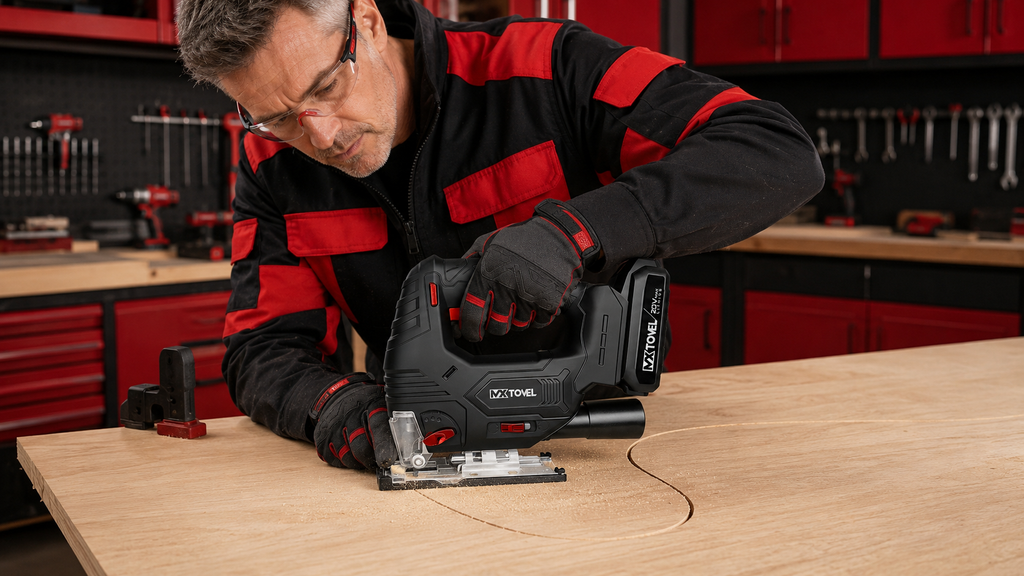
Cordless Jig Saw vs. Brushless Jig Saw
These two terms describe different characteristics of a tool:
| Term | What It Describe | Meaning |
| Cordless Jig Saw | Power source | Uses a rechargeable battery without a power cord |
| Brushless Jig Saw | Motor type | Uses a brushless motor instead of a brushed motor |
| Brushless Cordless Jig Saw | Power source and motor | Battery-powered model equipped with a brushless motor |
A brushless motor may provide efficient power delivery, reduced maintenance, and longer service life compared with a traditional brushed design. However, buyers should evaluate the complete tool rather than focusing on only one feature.
How to Choose the Right Jig Saw Blade
The blade has a major effect on cutting speed, control, and finish quality. Before cutting, consider the following points.
Choose a Blade for the Material
Wood-cutting blades usually have larger teeth for efficient material removal. Fine-tooth blades can produce a smoother edge, while metal-cutting blades generally use smaller, closely spaced teeth. Special blades are also available for plastics, laminates, and other materials.
Check the Blade Shank
Jig saw blades commonly use T-shank or U-shank designs. Confirm which blade interface your tool accepts before purchasing replacement blades.
Consider Tooth Direction and Tooth Count
Blade tooth design influences the direction of cutting forces and the appearance of the finished surface. A blade with more teeth per inch usually produces a finer cut, while a blade with fewer, larger teeth often cuts faster but may leave a rougher edge.
Match the Blade Length to the Workpiece
The blade must extend safely beyond the bottom of the material throughout its stroke. Do not use a blade that is too short for the workpiece.
How to Use a Cordless Jig Saw Safely
Good preparation improves both safety and cutting quality.
- Select a blade that is suitable for the material.
- Remove the battery before installing, removing, or checking the blade.
- Secure the workpiece firmly with clamps.
- Mark a clear cutting line before starting.
- Wear suitable eye and hearing protection.
- Keep hands away from the blade and the underside of the workpiece.
- Allow the blade to reach operating speed before entering the material.
- Guide the tool steadily without forcing it forward.
- Wait for the blade to stop completely before setting the tool down.
- Follow the manufacturer’s instructions for operation and maintenance.
When cutting metal or plastic, check whether the material requires a specific blade, speed setting, or cutting method. Avoid using a damaged, bent, or excessively worn blade.
Tips for Cleaner and More Accurate Cuts
For better results, keep the base plate flat against the workpiece and apply steady forward pressure. Pushing too quickly can cause the blade to wander or produce a rough edge. If the tool has variable speed or orbital action, adjust these settings according to the material and the type of finish required.
For visible surfaces, consider using a fine-cutting blade and test the cut on scrap material first. Supporting the material close to the cutting line can also reduce vibration. When following a straight line, a guide fence or clamped straightedge may improve consistency if the tool and application allow it.
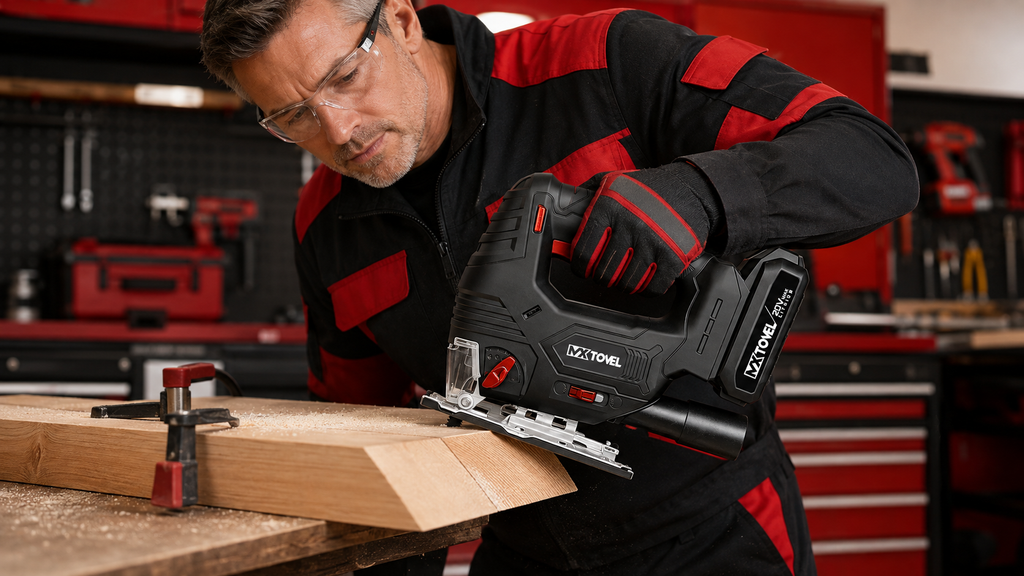
What to Look for When Buying a Cordless Jig Saw
When comparing models, evaluate the tool as a complete cutting system. Useful points to consider include:
- Battery voltage and compatibility with other tools
- Motor type: brushed or brushless
- Variable-speed control
- Orbital-action settings
- Adjustable base for bevel cutting
- Tool-free blade-change design
- Grip comfort and overall tool balance
- LED work light or dust-management features
- Blade compatibility and available accessories
- Product support and replacement-part availability
If you already use battery-powered tools, choosing a jig saw from the same compatible battery platform may simplify charging and battery management. Always verify compatibility rather than assuming batteries fit products from different series.
Why Choose an MXTOVEL Cordless Jig Saw?
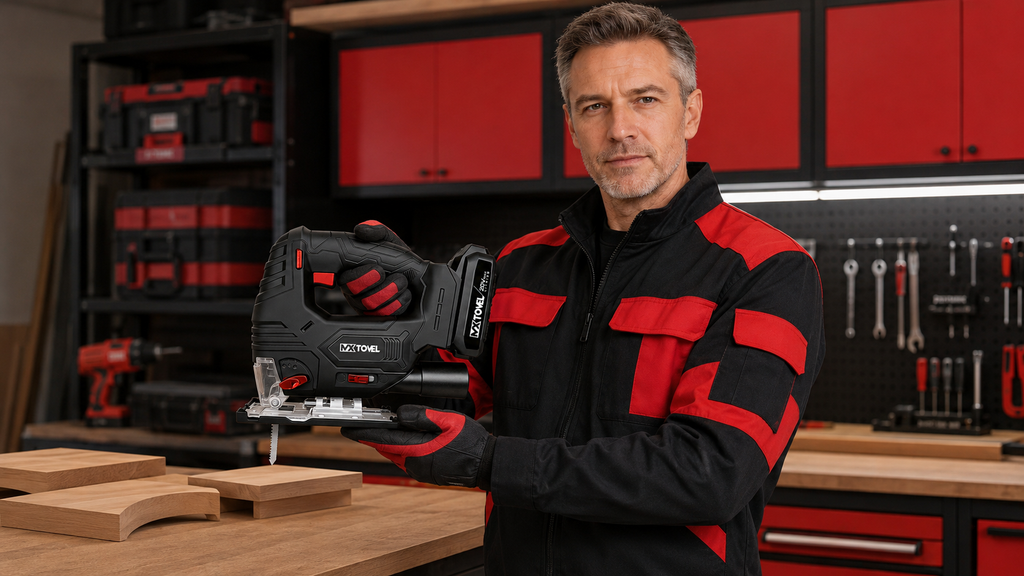
MXTOVEL provides power-tool solutions for DIY users, professional operators, importers, and retail partners. An MXTOVEL Cordless Jig Saw is designed to support flexible cutting tasks in workshops, renovation projects, installation work, and mobile jobsite applications.
When selecting a model, review its motor configuration, battery platform, cutting settings, blade interface, and included accessories. For wholesalers and distributors, MXTOVEL can also help match product configurations and packaging solutions to different market requirements.
Frequently Asked Questions
Is a cordless jig saw suitable for cutting wood?
Yes. With a suitable wood-cutting blade, it can cut solid wood, plywood, MDF, particleboard, and other wood-based panels within the tool’s rated capacity.
Can a cordless jig saw make straight cuts?
Yes. Although a jig saw is well known for curved cutting, it can also make straight cuts. A guide and the correct blade can help improve accuracy.
Can it cut metal?
Many models can cut certain metal materials when fitted with the correct metal-cutting blade. Cutting capacity and recommended settings vary, so check the tool and blade instructions first.
Is a cordless jig saw the same as a brushless jig saw?
Not necessarily. Cordless refers to battery power, while brushless refers to the motor design. A tool can be both cordless and brushless.
Which blade should I use for a clean wood cut?
A fine-tooth wood blade is generally more suitable for a smooth finish. The ideal blade also depends on the wood type, thickness, and desired cutting speed.
Conclusion
A Cordless Jig Saw combines portability, flexibility, and controlled cutting in one practical tool. It is useful for straight cuts, curved profiles, panel openings, bevel work, and many common woodworking or installation tasks. The best results come from choosing the correct blade, securing the material properly, and matching the tool settings to the application.
Whether you are improving a home workshop or sourcing cordless tools for your market, MXTOVEL can provide product solutions for a wide range of cutting needs. Visit the MXTOVEL website or contact the team to learn more about available cordless jig saw options.