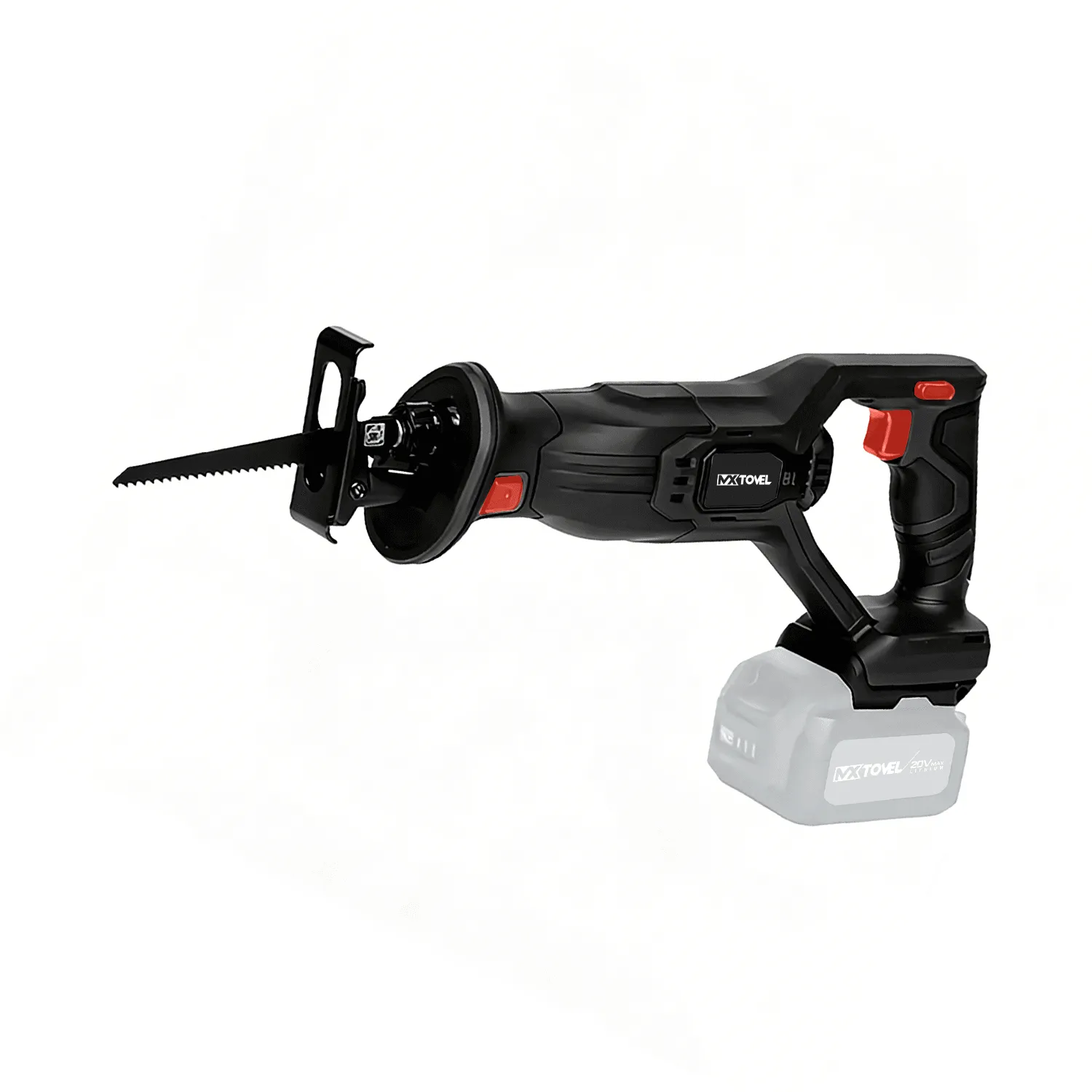
When cutting wood, metal, PVC pipe, or handling demolition work, having a versatile cutting tool can make the job easier. A Brushless Reciprocating Saw combines cordless mobility with a brushless motor, making it suitable for DIY projects, construction, maintenance, renovation, and professional applications.
Unlike conventional saws designed mainly for straight and precise workshop cuts, a reciprocating saw is built for fast and flexible cutting in a wide range of working environments.
In this guide, we’ll explain what a Brushless Reciprocating Saw is, how it works, what materials it can cut, and what to consider when choosing one.
What Is a Brushless Reciprocating Saw?
A Brushless Reciprocating Saw is a power tool that uses a motor to move a saw blade rapidly backward and forward.
This reciprocating movement allows the blade to cut through different materials depending on the blade installed.
Common materials include:
- Wood
- Metal
- PVC and plastic
- Pipes
- Tree branches
- Construction materials
The tool is especially useful when working in locations where using a larger stationary saw would be difficult.
Cordless models provide additional flexibility because users can work without being connected to a power outlet.
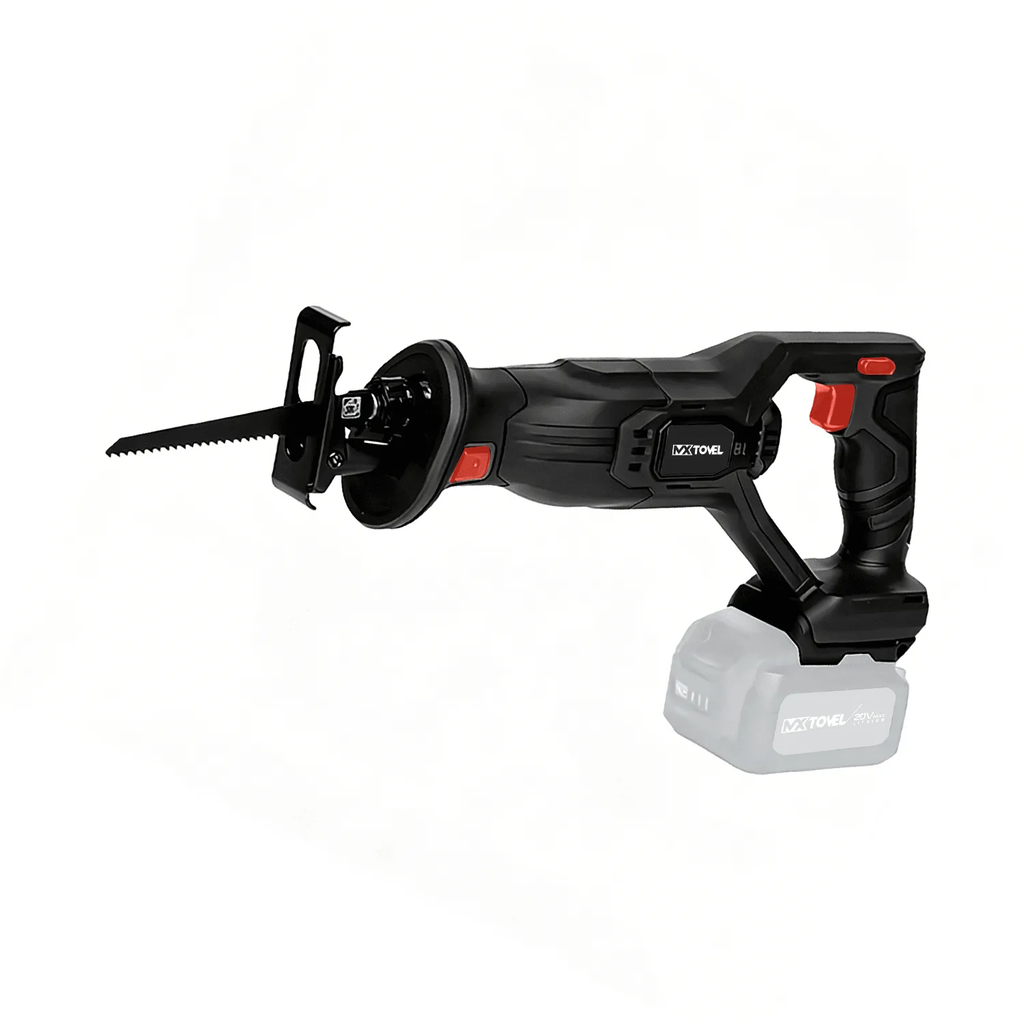
How Does a Brushless Reciprocating Saw Work?
The working principle of a reciprocating saw is relatively simple.
When the trigger is pressed, the motor transfers power to a mechanism that converts rotational motion into rapid back-and-forth blade movement.
The moving blade then cuts through the workpiece.
Cutting performance depends on several factors, including the material being cut, blade type, blade condition, speed setting, and how the tool is handled.
Choosing the correct blade is therefore just as important as choosing the reciprocating saw itself.
Why Choose a Brushless Motor?
One of the main characteristics of a modern Brushless Reciprocating Saw is its brushless motor.
Traditional brushed motors use carbon brushes to transfer electrical energy. These brushes experience physical contact and gradually wear during operation.
A brushless motor uses electronic control instead.
Reduced Mechanical Wear
Because there are no carbon brushes to replace, brushless motors eliminate brush-related wear and maintenance.
Efficient Power Delivery
Electronic motor control helps manage power delivery according to operating conditions.
This is particularly useful when cutting demanding materials such as thick wood or metal.
Suitable for Frequent Use
Reduced brush-related maintenance makes a brushless power tool particularly attractive for users who regularly use their equipment on jobsites or in workshops.
Key Features of a Cordless Brushless Reciprocating Saw
When selecting a cordless reciprocating saw, there are several features worth considering.
Brushless Motor
A brushless motor provides electronically controlled operation without traditional carbon brushes.
For professional users and frequent DIY work, this can help reduce maintenance requirements.
Cordless Design
A cordless design allows the reciprocating saw to be used in workshops, construction sites, gardens, renovation projects, and other areas where access to an electrical outlet may be inconvenient.
Variable Speed Control
Different materials may require different cutting speeds.
Variable speed control allows the operator to adjust cutting behavior according to the application.
Tool-Free Blade Change
A convenient blade-changing mechanism can make it easier to switch between blades for wood, metal, plastic, and other materials.
Ergonomic Grip
Reciprocating saws can generate vibration during cutting.
A comfortable grip and balanced tool design can help provide better handling during extended operation.
What Can a Brushless Reciprocating Saw Cut?
One advantage of a reciprocating saw is its versatility.
By installing the appropriate blade, the same power tool can be used for multiple cutting applications.
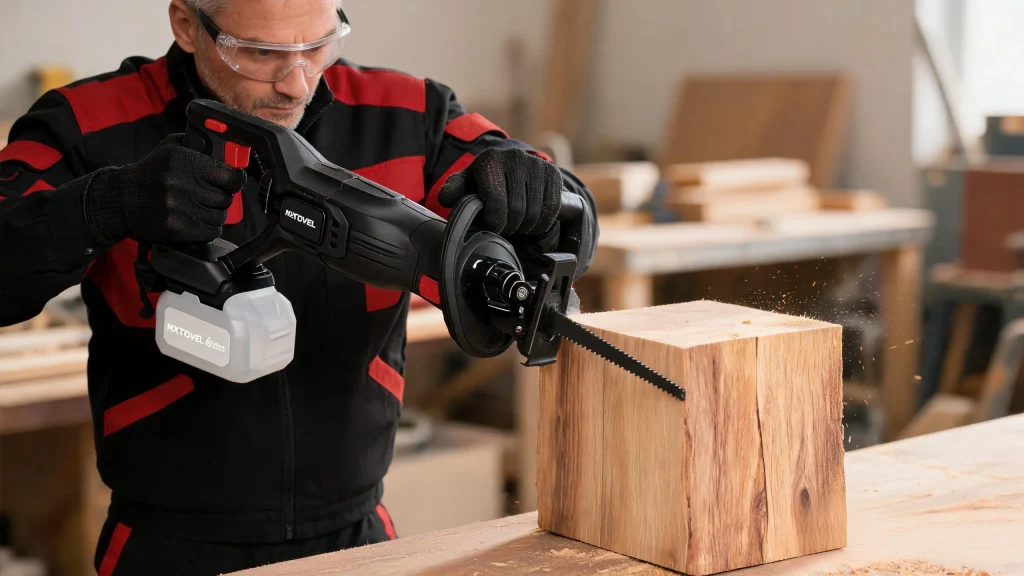
Cutting Wood
A reciprocating saw can be used to cut timber, wooden boards, framing materials, and other wood products.
It can be particularly useful for renovation and demolition projects where cutting speed and accessibility are more important than producing a fine finished edge.
Cutting Metal
With a suitable metal-cutting blade, a Brushless Reciprocating Saw can be used for various metal-cutting applications.
Typical examples include metal pipes, thin metal profiles, and other suitable metal workpieces.
Always choose a blade designed for the specific metal being cut.
Cutting PVC Pipes
Reciprocating saws are also useful for cutting PVC and plastic pipes.
This makes them suitable for plumbing, renovation, maintenance, and installation work.
Cutting Tree Branches
With the correct pruning blade, a cordless reciprocating saw can also be used for selected outdoor cutting applications such as trimming branches.
The cordless design is particularly convenient when working around a garden or property.
Common Applications
A Brushless Reciprocating Saw can be useful across many working environments.
Common applications include home renovation, demolition work, plumbing maintenance, construction, workshop projects, garden maintenance, and general DIY tasks.
For contractors, the ability to change blades means one reciprocating saw can handle several types of cutting jobs without requiring a completely different power tool for every material.
For homeowners and DIY users, the same versatility can make the tool useful for repairs and renovation projects around the home.
Brushless vs. Brushed Reciprocating Saw
Both brushed and brushless reciprocating saws can perform similar cutting tasks, but their motor designs are different.
A brushed motor relies on carbon brushes, while a brushless motor uses electronic control.
Brushless technology eliminates the need to replace worn carbon brushes and is commonly used in modern cordless power tools.
For users who frequently use their reciprocating saw, these characteristics can make a brushless model worth considering.
How to Choose a Brushless Reciprocating Saw
Choosing the right reciprocating saw depends on how and where you plan to use it.
Consider Your Cutting Materials
Start by identifying the materials you cut most frequently.
For general renovation work, you may need blades for both wood and metal.
For garden maintenance, pruning blades may be more important.
Check Variable Speed Control
Speed control can provide additional flexibility when working with different materials.
It also gives the operator more control when beginning a cut.
Consider Blade Compatibility
Check which blade types and sizes are compatible with the saw.
A versatile blade system makes it easier to switch between different applications.
Check the Battery Platform
For cordless tools, battery compatibility is an important consideration.
If you already own several cordless tools from the same battery platform, choosing a compatible reciprocating saw can simplify battery management.
Consider Ergonomics
Pay attention to grip design, balance, trigger position, and overall handling.
These factors become increasingly important during longer cutting sessions.
How to Use a Brushless Reciprocating Saw Safely
Before operating a reciprocating saw, always read the manufacturer’s instructions and follow appropriate workplace safety procedures.
Wear suitable eye protection and other personal protective equipment required for the material and working environment.
Make sure the workpiece is secure before cutting.
Install a blade designed for the material you are working with and check that it is properly locked into the tool.
Keep hands away from the cutting area and allow the blade to stop completely before placing the tool down.
When changing a blade or performing adjustments, disconnect the battery first.
Why Consider MXTOVEL?
MXTOVEL provides cordless power tools for a variety of professional, workshop, home improvement, and DIY applications.
A MXTOVEL Brushless Reciprocating Saw can be incorporated into a cordless tool lineup for users who need flexible cutting capabilities across different materials.
For distributors, importers, and professional tool buyers, factors such as product configuration, battery compatibility, application requirements, quality control, and supplier support should all be considered when selecting products for a target market.
Frequently Asked Questions
What is a Brushless Reciprocating Saw?
A Brushless Reciprocating Saw is a power saw that uses a brushless motor to drive a blade in rapid back-and-forth motion. Depending on the blade installed, it can be used to cut various materials.
Can a reciprocating saw cut metal?
Yes. A reciprocating saw can cut suitable metal workpieces when equipped with the correct metal-cutting blade.
Can a reciprocating saw cut wood?
Yes. Wood cutting is one of the common applications for reciprocating saws. Different wood blades are available depending on the material and desired cutting performance.
Can I use a reciprocating saw for tree branches?
A cordless reciprocating saw equipped with an appropriate pruning blade can be used for selected branch-cutting and garden maintenance applications.
Why choose a brushless reciprocating saw?
A brushless model eliminates traditional carbon brushes and uses electronic motor control. This reduces brush-related maintenance and makes brushless technology attractive for modern cordless power tools.
Conclusion
A Brushless Reciprocating Saw is a versatile cutting tool for wood, metal, PVC, renovation, demolition, maintenance, and selected outdoor applications.
Its usefulness comes from the combination of a reciprocating cutting action and interchangeable blades. With the right blade and operating technique, users can adapt the same tool to a variety of jobs.
When choosing a cordless reciprocating saw, consider the motor type, speed control, blade compatibility, ergonomics, battery platform, and the materials you plan to cut.
For professionals, DIY users, distributors, and tool buyers looking for a flexible cordless cutting solution, the MXTOVEL Brushless Reciprocating Saw can be considered as part of a broader cordless power tool lineup.